Store Displays® Announces Restock of Key Items for Back-to-School Season
July 22, 2026
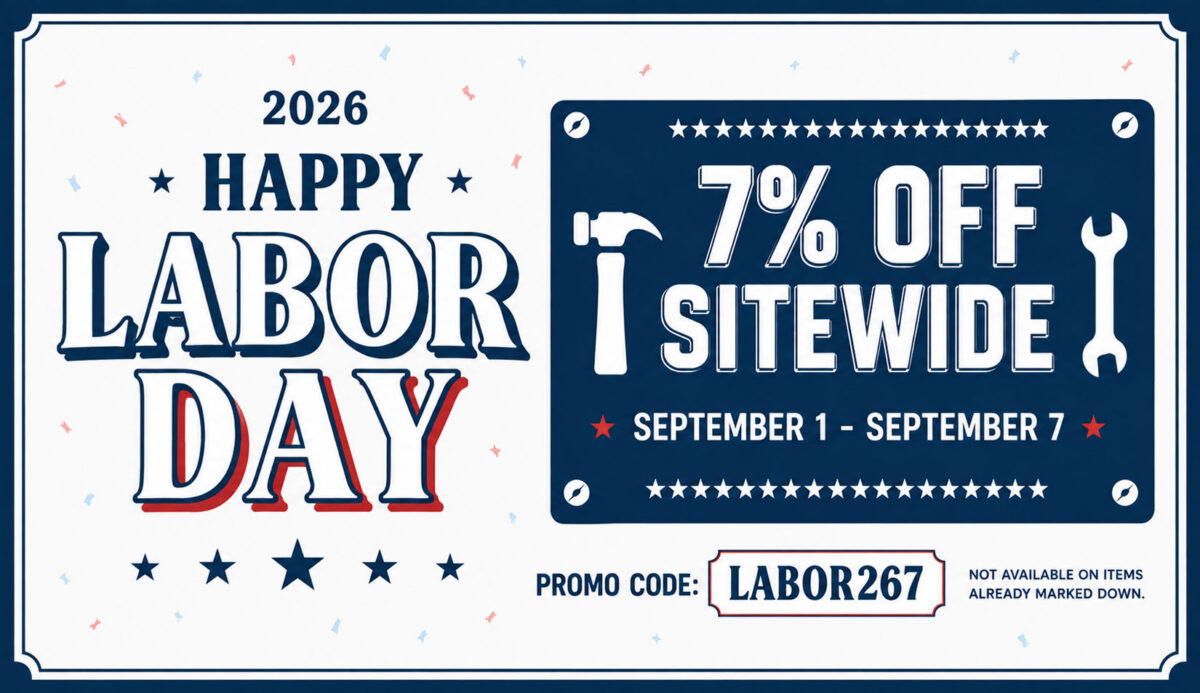
Store Displays® Honors the American Worker with a Sitewide Labor Day Sale
September 1, 2026
Many retailers think of fixtures as a practical necessity such as somewhere to put the product or something simple to keep the shelves organized. But research shows that thinking can cost retailers a lot of money.
The retail displays in your store are not passive infrastructure. They are active selling tools. How you display a product determines whether a customer notices it, picks it up, and decides to buy it. The fixture, the placement, the height, the organization, and the visual context all work together to influence decisions that happen in seconds, often before the customer is even consciously aware a decision is being made.
The data behind this is substantial. This post breaks it down so you can use it to your advantage when setting up or reorganizing your store.
What the Research Tells Us
Multiple sources and research reports from sources including Shopify, Capital One Shopping, Contra Vision and more, uncovered that:
84 to 89% of all shoppers have made impulse purchases, and 80% of those impulse purchases happen in physical brick-and-mortar stores, not online.
That figure alone should steer how you should think about your store layout. The majority of what customers buy in your store was not on their list when they walked in. They decided to buy it because of something they saw, something that caught their attention, something that was displayed in a way that made them want it.
The research goes on to specify:
- Products at eye level are 82% more likely to be picked up and purchased than products at floor level.
- Shoppers are 60% more likely to notice a product displayed at the end of an aisle.
- Using mannequins in displays can increase sales of displayed garments by up to 66%.
- Grouping similar or complementary products together can increase sales of those products by 14%.
- 8 out of 10 shoppers base their in-store buying decisions on what they see, not what they planned.
- Poor merchandising costs the retail industry an estimated $125 billion annually in lost sales.
That last figure is staggering, $125 billion in lost sales, not because the products were wrong or the prices were off, but because of how they were displayed.
How Retail Displays Create the Conditions for a Sale
Understanding why displays work means understanding a little about how customers move through and experience a retail environment. Shoppers are not deliberate, systematic evaluators. They are emotional, environmental, and time-pressured. Their decisions are shaped by what they encounter, in what order, and in what context.
Well-designed store displays work across several psychological mechanisms simultaneously.
Visibility and attention. A product that is not visible is a product that is not being considered. This sounds obvious, but the implication is significant: the physical placement and presentation of your product directly determines how many purchase decisions it even gets to participate in. A well-positioned display on a gondola end cap puts a product in front of every customer who walks that aisle. The same product buried three shelves down in the middle of a run gets a fraction of the exposure.
Perceived value. The fixture itself communicates something about the product it holds. A commercial glass display cabinet signals that what is inside is worth protecting and worth paying attention to. A lit, clean showcase elevates the perceived quality of its contents before the customer reads a single price tag. The inverse is equally true: a damaged, overcrowded, or disorganized fixture degrades the perceived value of even a premium product.
Context and inspiration. Retail displays that show products in use or in combination create aspiration and suggest solutions. A mannequin styled in a full outfit does not just show a shirt; it shows a look, a lifestyle, an answer to the question of what to wear. A cross-merchandised gondola end cap that pairs a product with everything a customer needs to go with it reduces friction and increases average order value.
Ease of navigation. One of the most consistent findings in retail research is that confusion kills sales. A 2024 study found that 33% of consumers cited hard-to-find products as their top in-store frustration, and that disorganized displays drove over $8 billion in lost sales from mid-market retailers alone. When customers cannot find what they are looking for, they do not spend more time searching. They leave.
Gondola Shelving: The Fixture That Shapes the Store
For grocery stores, convenience stores, and general merchandise retailers, among others, retail gondola shelving is the single fixture category that has the most direct impact on how customers experience the store. Gondola displays define your aisle structure, which determines traffic flow, which determines which products get exposure and which get bypassed.
The research on shelf positioning within a gondola run is some of the most well-established in all of retail science. Eye level is buy level. Products placed at eye level consistently outperform the same products placed at floor level or above shoulder height, often by a significant margin. End caps, which are the displays at the head and foot of each gondola run, are the highest-value real estate on the floor. Shoppers are 60% more likely to notice a product on an end cap than on a mid-aisle shelf.
How your gondola shelving is configured also affects how long customers spend in your store. A well-organized, clearly labeled gondola run moves customers through efficiently without frustrating them. A poorly organized one sends them to a competitor next time.
If you are looking for gondola shelving for sale, the configuration options matter as much as the price. Single-sided gondolas work for wall runs and perimeter displays; double-sided units are designed for the middle of the floor where customers browse from both sides. Adjustable shelf heights give you the flexibility to adapt your display as your product mix changes.
Retailers who reconfigure gondola layouts with eye-level placement and active end cap merchandising consistently see measurable lifts in sales of the featured products, often without changing anything about the products themselves.
Clothing Racks and Mannequins: The Apparel Store Equation
For apparel retailers, the fixture and display decisions are even more directly tied to purchase behavior because clothing is a product that requires imagination. Customers cannot always picture how a garment will look on them from a tightly packed hanging rack. They need help seeing it.
This is where commercial clothing racks and mannequins for sale do their most important work. The data on mannequins in particular is striking: sales of garments displayed on mannequins increase by up to 66% compared to the same garments hanging on a rack. That figure reflects what any experienced visual merchandiser already knows intuitively. A mannequin shows the customer what they could look like. A hanger shows them a piece of fabric.
The configuration of clothing racks also shapes the shopping experience in ways that directly affect revenue. Overcrowded racks slow browsing and signal discount rather than quality. Racks with breathing room between garments, a consistent hanger style, and logical organization by size or color create an environment where customers spend more time and feel more confident in their selections.
A few principles that translate directly into sales:
- Fewer items on each rack, displayed with more space, consistently outperform packed racks in both browsing time and conversion.
- Face-out display (showing the front of the garment rather than the side) increases engagement with featured pieces.
- A mannequin at the entrance styled in a current look is one of the most cost-effective marketing investments in apparel retail.
Glass Display Cases: When the Fixture Sells the Product
In specialty retail, the relationship between fixture and product value is most visible in how retail display cases affect customer perception and willingness to pay.
The psychology is that enclosure signals value. A product behind glass is treated as worth protecting. The effort required to access it, the formality of asking a staff member to unlock the case, the physical separation from the general shopping environment all communicate that what is inside is special. Jewelry, high-end electronics, premium vape products, and collectibles all benefit from this effect.
Lighting amplifies it further. A well-lit commercial glass display cabinet with LED lighting creates a presentation that no open shelf can match. The product looks more premium. The store looks more professional. And the customer’s willingness to engage, to ask questions, to try things on or ask to hold something, increases substantially.
The counter-height showcase has an additional function that is easy to overlook: it creates a natural service interaction point. When a customer stops to look at a showcase, a staff member approaches, a conversation starts, and the sale begins. That dynamic is harder to replicate with an open shelf.
Gridwall and Slatwall: Maximizing Wall Space and Flexibility
Wall display systems are among the most versatile fixtures in retail, and their impact on sales is often underestimated precisely because they blend into the store environment so effectively when done well.
Gridwall panels and slatwall systems both work on the same principle of turning otherwise unused wall space into active selling surface. A wall covered in well-organized gridwall with clearly displayed product pulls customers toward it, creates stopping points, and generates engagement. A bare wall does none of those things.
The flexibility of gridwall and slatwall also allows retailers to reconfigure their displays quickly, which matters because freshness drives browsing. A display that looks exactly the same every time a returning customer visits stops generating attention. A display that changes regularly, featuring new arrivals or seasonal products in a prominent wall position, tells the customer there is always something new to find.
Cross-merchandising on wall systems is particularly effective. A slatwall section in a beauty store that groups a skincare product with its companion cleanser, toner, and moisturizer tells a complete story and increases the likelihood that a customer buys multiple items rather than just one.
The Practical Takeaway: Your Retail Displays Are Your Sales Team
The research points to a consistent conclusion that in physical retail, the display environment is not a backdrop for the sale. It is an active participant in it.
Customers make most of their purchase decisions in-store, when they are in the moment, in response to what they see. The height where a product is placed, the fixture it sits on, whether it is grouped with complementary items, whether it is lit, locked up, whether a mannequin is wearing it, whether the overall environment is organized and easy to navigate, all of these factors influence the decision in measurable ways.
The good news for independent retailers is that most of the highest-impact changes are retail fixture changes, not price changes or product changes. Repositioning a product to eye level costs nothing. Adding an end cap display to a gondola run is a low-cost investment with a measurable return. Dressing a mannequin in a current look and placing it near the entrance is one afternoon of work that can drive weeks of sales, as well as reduce the amount of decisions customers need to make before purchasing.
If your current retail displays are limiting what you can do, whether that is overcrowded clothing racks that make browsing frustrating, a gondola layout that sends customers in the wrong direction, or an absence of the wall display systems that would let you feature product more prominently, the fix is more straightforward than a renovation.
Browse the full range of store displays or read our guide on how to refresh your store displays without a full renovation for practical steps you can take immediately. If you need more ideas or recommendations, the experts at Store Displays® are always ready to help!